
TRIESTE · 12–17 SEPTEMBER 2027
Preliminary Scientific Programme
Programme at a Glance
The 18th Multinational Congress on Microscopy will bring together the microscopy community for six days of scientific exchange, discussion and networking in Trieste.
The preliminary programme combines plenary lectures, parallel scientific sessions, poster sessions, industry workshops and dedicated networking activities.
Opening & Welcome
Sunday, 12 September 2027
Registration will open the Congress, followed by the Opening Ceremony and Welcome Reception.
Four Days of Science
Monday, 13 to Thursday, 16 September 2027
Plenary lectures, parallel scientific sessions, poster sessions and industry lunch workshops will form the core programme.
Featured Activities
Throughout the Congress
Scientific pitches, Meet the Experts, young researchers networking, innovation activities and the Conference Dinner will complement the scientific programme.
Closing & Awards
Friday, 17 September 2027
A final plenary lecture and parallel scientific sessions will lead into the Closing Ceremony and Awards.
Preliminary programme
Last updated September 2026
Please note: session allocation, timings and individual programme elements may be subject to change.

Confirmed Plenary Speakers
Meet the first confirmed plenary speakers who will join the international microscopy community at 18MCM 2027 in Trieste.
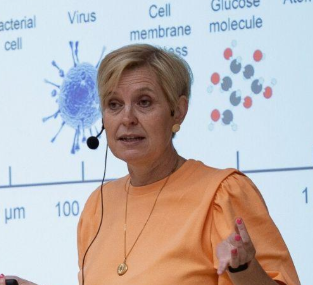
University of Antwerp, Belgium
Sara Bals
Sara Bals is Full Professor at the University of Antwerp and a member of the EMAT research group. Her research focuses on advanced electron tomography and 3D electron microscopy, enabling the structural and chemical characterisation of nanomaterials down to the atomic scale, including under realistic in situ conditions.
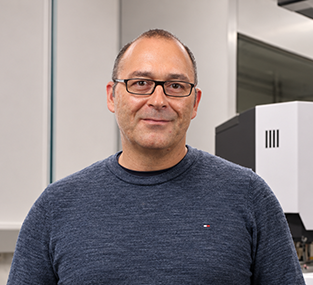
Technical University of Munich, Germany
Marc-Georg Willinger
Marc-Georg Willinger is Professor of In-Situ and Operando Electron Microscopy at the Technical University of Munich. His research uses direct atomic-scale observations to investigate the relationship between structure and properties in materials, with particular emphasis on catalytic processes, non-equilibrium dynamics, and materials for energy conversion and storage.
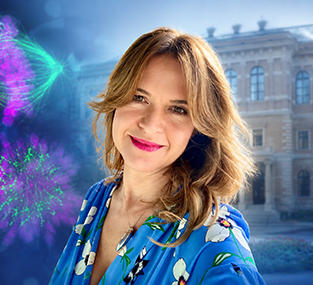
Ruđer Bošković Institute, Zagreb, Croatia
Iva Tolić
Iva Tolić is Professor and Head of the Laboratory of Cell Biophysics at the Ruđer Bošković Institute. Her research explores the biophysical mechanisms of cell division, with a particular focus on microtubules, motor proteins and the mitotic spindle, combining advanced microscopy, laser microsurgery and quantitative approaches.
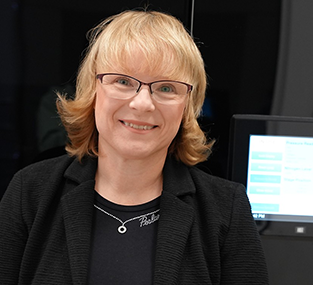
Jožef Stefan Institute, Ljubljana, Slovenia
Nina Daneu
Nina Daneu is a Scientific Advisor at the Advanced Materials Department of the Jožef Stefan Institute. Her research focuses on the microstructure and nanoscale characterisation of advanced ceramic and functional materials, using electron microscopy to investigate interfaces, structural defects, phase transformations and their relationship with material properties.
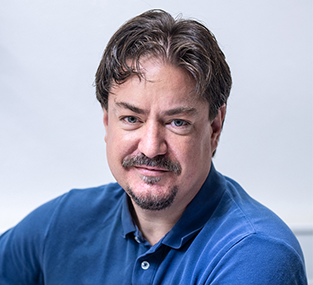
Leibniz Institute of Photonic Technology & Friedrich Schiller University Jena, Germany
Tomáš Čižmár
Tomáš Čižmár is Professor of Waveguide and Fiber Optics at Friedrich Schiller University Jena and leads Fiber Research and Technology at Leibniz IPHT. His research develops advanced photonic and holographic imaging methods, including ultrathin fibre-based endoscopes for minimally invasive, high-resolution imaging deep inside biological tissue.
Scientific Sessions
The preliminary scientific programme is organised around three main thematic areas, bringing together methodological advances and applications across life and materials sciences.
IM - Instrumentation & Methods
IM1 - Advanced Spectroscopy, Hyperspectral and Optical Imaging of Hard and Soft Matter
IM2 - Correlative and Multimodal Workflows: Electron, Light, X-ray and Scanning Probe Methods
IM3 - Quantitative Electron Imaging and Diffraction: 4D-STEM, Ptychography and Emerging Approaches
IM4 - Advances in Cryo-Electron Microscopy and Single Particle Analysis
IM5 - 3D and Volume Electron Microscopy: Sample Preparation, Instrumentation, Workflows and Data Solutions
IM6 - Electron Optics, Beam Control and Novel Imaging Concepts
IM7 - In Situ, Operando and Environmental Microscopy
IM8 - AI, Machine Learning and Data-Driven Microscopy
LS - Life Sciences
LS1 - Advanced Fluorescence Microscopy: Multiscale, High-Resolution and Dynamic Imaging and Analysis
LS2 - 3D and Volume Electron Microscopy in Life Sciences: From Cells and Tissues to Biological Systems
LS3 - Cellular and Organelle Structure, Function and Ultrastructure
LS4 - Microscopy in Pathology, Diagnostics and Regenerative Medicine
LS5 - Correlative and Multimodal Imaging across Biological Scales
LS6 - Advanced Sample Preparation for Biological and Biomedical Microscopy
LS7 - Plant Sciences: Multiscale Imaging of Plant Structure, Function and Development
LS8 - Neuroscience: Multiscale Imaging of Neurons, Circuits and Brain Architecture
MS - Materials Sciences
MS1 - Ceramics, Composites, Minerals, and Materials in Cultural Heritage
MS2 - Polymers, Soft Matter, and Organic Materials
MS3 - Metals, Alloys, and Structural Materials
MS4 - Low-Dimensional Materials: 0D, 1D, and 2D Systems
MS5 - Magnetic, Ferroelectric, Quantum, and Spintronic Materials
MS6 - Thin Films, Heterostructures, Coatings, Surfaces, and Interfaces
MS7 - Materials for Energy Storage, Conversion, and Sustainability
MS8 - Advanced Functional Materials: Structure, Properties, and Emerging Applications
Featured Sessions & Activities
Alongside the core scientific programme, 18MCM 2027 will host a number of dedicated sessions and activities designed to encourage interaction, exchange and engagement across the microscopy community.
Particular attention will be given to young researchers, with dedicated opportunities to present their work, build new connections, engage with experienced scientists and contribute actively to the life of the Congress.
Be part of 18MCM 2027
Join the international microscopy community in Trieste and take an active part in six days of scientific exchange, discussion and collaboration.
Share your research. Join the discussion. Shape the Congress.
Save the date: 12–17 September, 2027